

The Mendmark
You need not be perfect to be whole.
A hand-forged copper cuff from the Remembered World.

RECOVERED ARTIFACT NO. 002
A recovered Ghinari artifact from the fictional remembered world of Warrior’s Daughter.

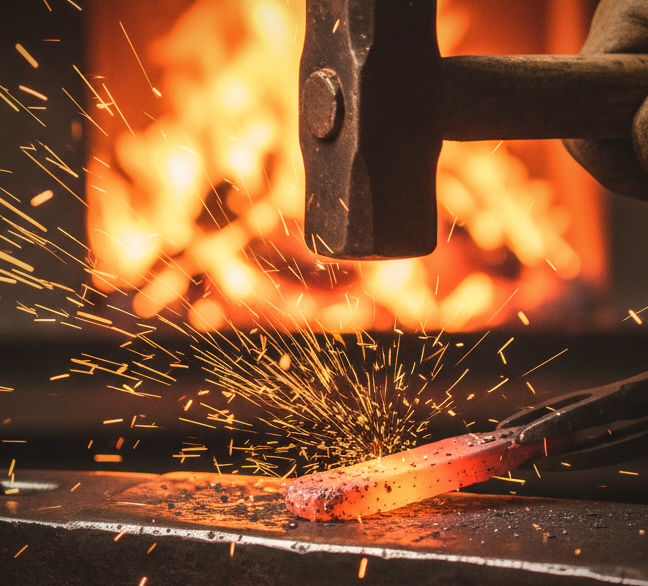
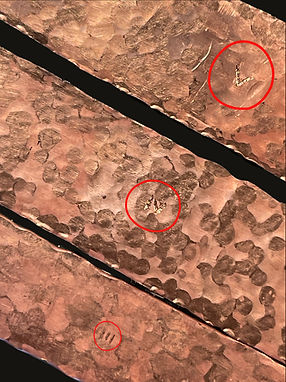
The worked surface preserves the evidence of shaping: overlapping hammer impressions, variations along the edges, and a separate copper plate secured by rivets.
The joining remains visible. Its presence invites examination of both the cuff’s construction and the meaning its wearer may have found in it.
The marks belong.


interpretation
Women and girls are taught to examine themselves for things to correct. Their bodies. Their voices. Their ambitions. Even their strength can be judged against someone else’s idea of how it should look.
There is always another adjustment. Another condition to meet before they are allowed to feel enough.
The Mendmark carries a different teaching:
You need not be perfect to be whole.
Wholeness has room for uncertainty. For changing your mind. For learning a skill badly before learning it well. For taking up something new at fourteen or sixty.
You are allowed to grow without treating yourself as a problem to solve.
the joining

“Being mended does not require pretending you were never wounded.”
This Ghinari proverb remains at the heart of the Mendmark. Its visible joining gives that thought a physical form.
For some, the cuff may carry the meaning of repair. For others, it may speak of independence, possibility, or the freedom to be seen as they are.
There is room for each of those meanings.
The wearer brings her own story.
curator's notes
The Mendmark invites a question we cannot yet answer with certainty: did every visible joining begin as a repair?
A plate may reinforce the copper, preserve an alteration, or give deliberate physical form to a teaching. Its presence alone cannot establish what the cuff meant to its wearer.
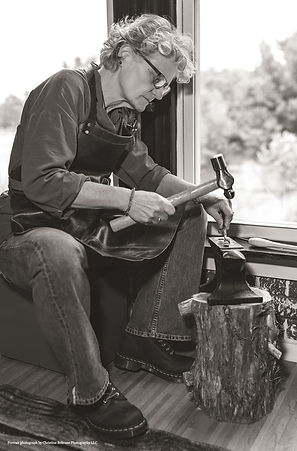
Robin Lee Kennedy’s copper reconstruction work offers a useful perspective. Hammering, shaping, and joining leave marks through the ordinary process of making. A worked surface need not be evidence of damage.
This distinction matters when interpreting the Mendmark. The proverb concerning wounds belongs within its record. So does the teaching that wholeness does not require perfection.
One wearer may have understood the cuff through repair. Another may have carried it while learning, choosing a different life, or taking up work previously denied to her. These remain possibilities rather than conclusions we can draw from the metal alone.
The surviving object gives us a form. The person who wore it brought a life.
— Lily Ann Fenwyn
Curator, EMBERMARK
Return to the Museum →
Exhibit Record
Culture: Ghinari
Period: Approximately 2100–1700 BCE
Region: Baltic coast near modern Puck and Gdańsk, Poland
Classification: Personal artifact · Symbolic copper cuff
Known materials: Copper
Construction: Hand-hammered band with riveted copper plate
Inscribed rune: Valen — Remember
Known purpose: Remembrance of personal strength, inherent wholeness, and the freedom to become
Associated proverb: “Being mended does not require pretending you were never wounded.”
Exhibit teaching: “You need not be perfect to be whole.”