

WARRIOR'S DAUGHTER Chapter I

Updated: 11 hours ago
The Spark
By seventh period I’ve inhaled enough dry-erase fumes that it should be illegal, and my head hurts from being the “good kid.” I sit in the second-to-last row of English, the place where the teacher can see me if she tries but mostly forgets I exist. My notebook is open to a clean page, but I’m not writing the “personal reflection” Mrs. Kelly assigned. My pen is moving anyway.
Squares. Triangles. Circles. Little bands of lines along the edge of the paper. I don’t decide to draw them. They just… happen.
My hand moves while Mrs. Kelly talks about “finding your voice,” and I fill the margins with shapes, stacking them up like bricks, like a wall that might keep something in or out. I’m not sure which.

“The prompt,” Mrs. Kelly says, walking down the aisle with her hands clasped behind her back, “is to write about a time you felt misunderstood.”
The air in the classroom shifts. Some kids groan. Someone behind me whispers, “Every day, lady,” and a pocket of laughter ripples through the middle row.
I keep drawing. A line here, a slanted angle there. A cluster of triangles that almost look like teeth.
Misunderstood, I think. That’s a nice word for it.
“Pens down for a minute,” Mrs. Kelly says. “Let’s brainstorm together.”
My pen stops. My hand doesn’t want to.
“Who’d like to share?” she asks. “Not the story yet—just the feeling. What does it feel like when someone gets you wrong?”
A few hands shoot up. People who always have something to say. People who like being heard or like to hear themselves talk. I shrink a little in my seat, out of habit.
“It’s annoying,” says a girl with perfect hair in the front row. “Like when my mom assumes I want to do cheer, just because she did.”
The class laughs on cue. Mrs. Kelly smiles.
“Frustrating,” says a boy near the windows. “Like when teachers think I’m not paying attention just ‘cuz I doodle.” He turns, grin crooked, offering the line up to the room.
Some of the kids snicker, like he’s making fun of me without knowing it, because I’m the one whose notebook margins are always full of lines and shapes, and everyone knows it. But Mrs. Kelly laughs with him.
“Well, some doodling can actually help us focus,” she says. “Depending on the student.”
Her eyes float past me and land on the boy. She doesn’t notice my drawings at all. Or she pretends not to. Either way, the message is clear.
“What about you, Mark?” she asks.
Of course.
Mark sits two rows ahead and just to the left. Close enough that I can see the back of his neck and the way his hair curls where his jersey rubs against it. He’s still wearing his baseball hoodie, even though it’s hot in here. The sacrifices we make to be ‘cool.’ Ironic.
He stretches, long and lazy. “Being misunderstood?” he says, like the idea is funny. “Like when my dad thinks I got a B because I ‘didn’t apply myself,’ but really I just didn’t care.”
More laughter. The kind that tells you this is the right kind of confession. Safe rebellion.
Mrs. Kelly makes a face like she’s pretending to be offended, but she’s smiling. “At least you’re honest,” she says.
Her gaze slides over us again. I feel it pass right through me this time, like light through glass.
Misunderstood, I think. As if the people in this room don’t decide who you are before you even open your mouth.
If I raised my hand and said, “I got pulled off the softball team because my mom needed a babysitter for my little brother and made me do it instead of my older brother, and we couldn’t afford a new mitt or shoes, and now half the school thinks we’re poor,” the room would stop for a beat, like everyone was deciding how to react.
And then someone would laugh. Everyone would.
If I said, “I feel misunderstood every time someone looks at me like being quiet means I don’t have anything to say,” they’d just… stare.
So, I don’t say anything. I drop my eyes back to my paper and draw another shape. A long vertical line this time, with two angled lines branching up near the top.

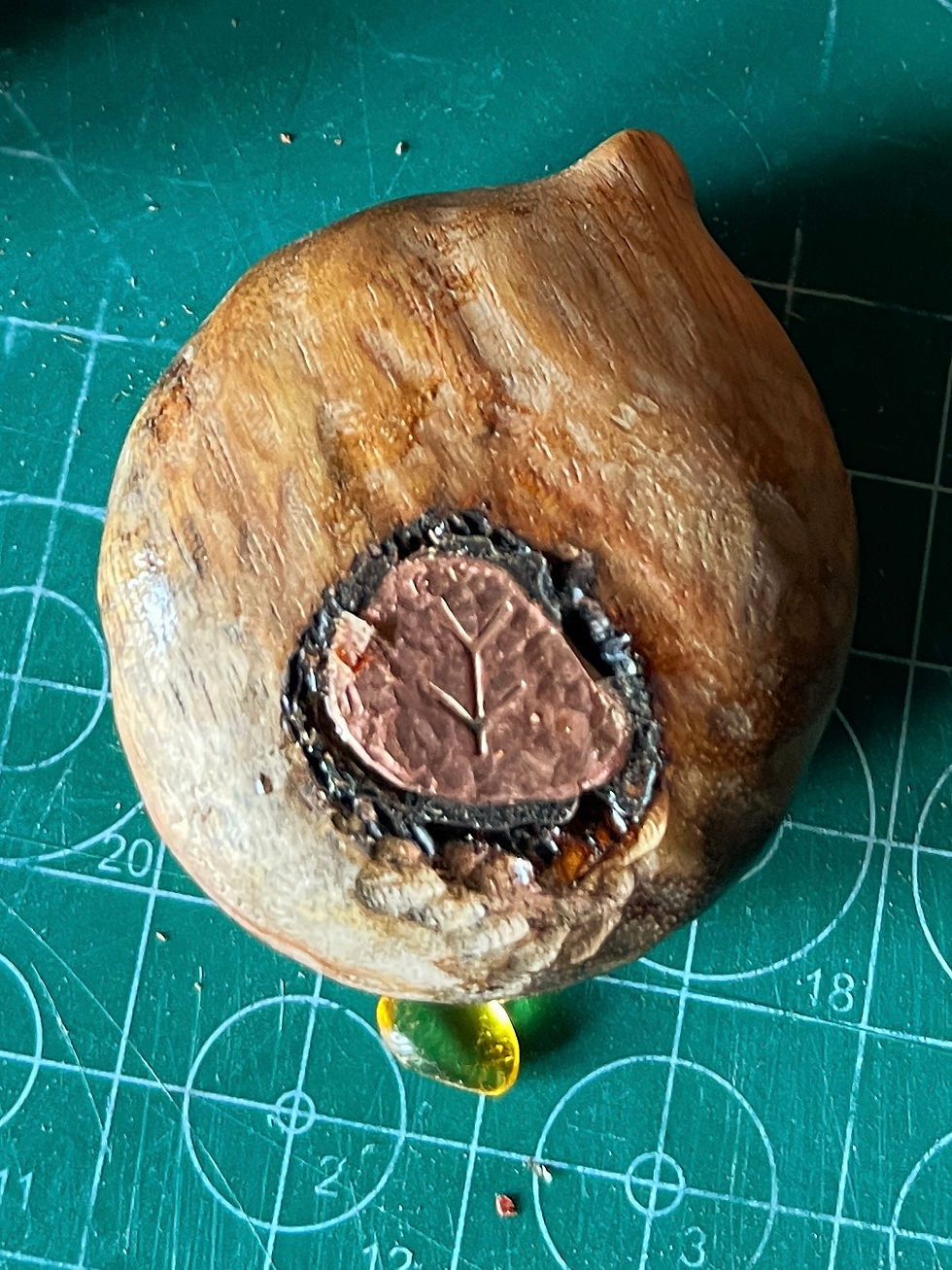
It looks like a tree with its arms raised. Or a person with outstretched arms cursing the sky. Or a letter from some alphabet I don’t know yet.
“Ari?” Mrs. Kelly says.
I jerk my head up, heart punching my ribs. “Yes?”
She looks surprised, like she didn’t expect me to answer, and that annoys me more than it should. I did say something. I said yes. That counts.
“I wondered if you had a moment you’d like to write about,” she says, voice soft, like I’m a skittish animal she doesn’t want to scare.
I close my notebook a little too fast, hiding the shapes. “I already thought of one,” I say. It’s not a lie.
Her smile is warm and approving, like I’ve just completed some secret test. “Good,” she says. “I’m looking forward to reading it.”
I nod. I’m not going to write it.Not yet.Not for her.Not for anyone.
The bell rings before she can say anything else. The room explodes into movement: chairs scraping, zippers zipping, the rustle of backpacks. The noise hits me all at once and I flinch, just a little.
“Homework’s on the board,” she calls over the chaos. “Rough draft due Monday!”
I slip my notebook into my backpack, careful not to bend the page with the shapes. It feels more important than the assignment.
“Ari!” I turn at the doorway.
“A strong start is better than a perfect finish,” Mrs. Kelly says with that teacherly brightness. “Just get something down, okay?”
My mouth tries to shape the words okay, Mrs. Kelly, but they stick. So, I just nod again and escape into the hall.
Why say that to me? Does she think I can’t handle writing a stupid rough draft? Does she expect that I’m the one who’ll fall behind?
The hallway is a river and I’m just debris in the whitewater. Kids shove past me—laughing, shouting, slamming their lockers like they own the place. Posters sag on the cinderblock walls: club meetings, the fall dance, the softball team’s winning record from last year.
My record. Our record. Proof I used to matter, at least a little.
I don’t look at the team photo. I already know what I’d see—me in the front row, smiling like the world wasn’t going to drop me the second I stopped being useful to them.
I hold my backpack tighter and head for my locker, breathing slow like Grampa taught me.
“Rowan!”
I know that voice. It’s not my last name, not really. My brother’s dad is gone, Mom never changed her name back, so I got it when I was born. I guess it fits better than Ari does sometimes.
I glance up. Mr. Chandler, the gym teacher, cutting through the crowd like a human bulldozer, whistle bouncing on his chest. He’s tall and broad, with a baseball cap like it’s part of his skull.
“Yes, sir?” I say automatically when he reaches me. Years of drills do that to you.
“You coming out to tryouts next week or what?” he says. “Coach says we really need Rowan’s bat.”
Heat rushes up my neck so fast I feel dizzy.
“I—” The word sticks. My tongue feels too big for my mouth. It’s like I’m back at the plate, bat ready for battle, pitcher releases the ball and it comes sizzling toward me. I swing… and miss.
“You were solid last year during summer ball,” he barrels on, not noticing. “Don’t tell me you’ve gone soft from sitting in English class.”
A few kids nearby chuckle. It’s not mean, exactly. Just easy. Like he tossed them a ball, and it felt good to catch it.
The sea of bodies continues around me.
“I can’t,” I manage, voice thin.
He squints. “You can’t what?”
“Try out.”
He snorts. “Sure, you can. Anybody can. That’s how tryouts work.” He pats my arm like I’m being dense while his eyes scan the bustling hallway. “Tell your mom I said you should. Maybe she’ll listen to me.”
She won’t.
“My mom told me she needs me at home,” I say. The words taste like dish soap and macaroni and cheese.
“To watch my little brother. And we can’t… I don’t have—”
The words jam in my throat. Cleats. Mitt. Gas money.
All the things I pretend not to care about because it’s easier than admitting I do.
Mr. Chandler’s expression shifts, just slightly. His eyes flick over my clothes, my shoes, my whole life, fast as a scan. Inventory. Assessment.
“Oh,” he says. Just that. Like a diagnosis.
He clears his throat. “Well. Family comes first,” he says, like he’s doing me a favor by pretending it’s about family.
“Maybe next year.”
He means never. I hear it, anyway.
“Yeah,” I say.
He’s already turning away, shout-talking to someone else. “Sanchez, you better not miss conditioning again or you’re running laps in your sleep!”
I stand there a second, the hallway’s whitewater churning around me. Nobody caught enough to care. They’ve already been swept back into their jokes and lockers and lives. I’m still standing there.
“Maybe next year” bounces around my skull.
Maybe when money magically floats downstream. Maybe when Mom stops clutching me like a life jacket. Maybe when my brother starts feeding himself at seven. Maybe when my older brother takes some responsibility. (Didn’t we learn to spell “responsibility” in the 5th grade? Thanks, Mrs. Holden. Too bad my brother had a different teacher.)
All of it pulls me under the current again. I can’t breathe.
I bite the inside of my cheek until the sting pulls me back, then shut my locker and head for the doors.
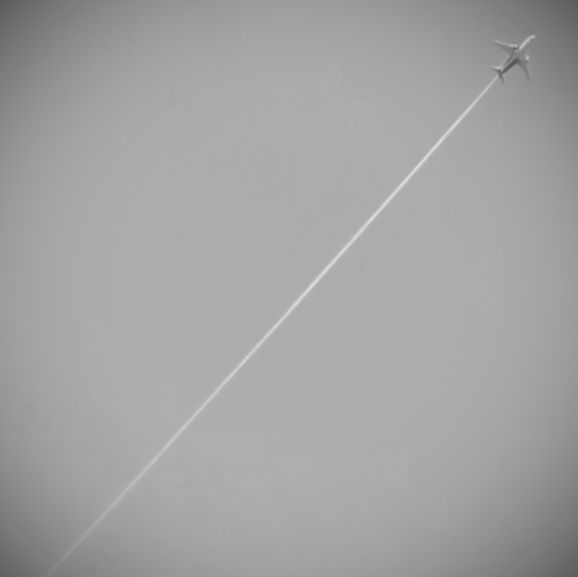
Outside, the air is too warm for the calendar and too cool for my mood. The sky is that flat blue that feels like a ceiling. A single contrail slices the sky. An airplane. I wonder where they’re going...
I watch it until the lines thin and disappear.
I shift my backpack to one shoulder and start down the sidewalk.
Free at last. Well… free until I get home.
Imani is waiting halfway, right where the cracked pavement meets the chain-link fence that separates the school property from the little patch of trees everyone calls “the woods,” even though it’s more like a polite hedge.
She’s leaning against the fence, one foot propped behind her, earbud in. Her braids are pulled back into a low puff, and she’s wearing the same hoodie she always wears when she’s done with people: black, oversized, paint splatters along the sleeves.
“You’re late,” she says, pushing off the fence to meet me.
“Got ambushed,” I say.
“By whom, Chandler?” She doesn’t even pause. “Let me guess. ‘Rowan, you coming back or you gonna waste that bat doing homework?’”
I snort, even though it’s not actually funny. “He didn’t say it exactly like that.”
“But he meant it exactly like that.” She side-eyes me. “You okay?”
I shrug. The movement feels stiff. “Fine.”
“Uh-huh.”
We fall into step together, sneakers scuffing the sidewalk in sync. This part of the walk home is my favorite. The school shrinking behind us, the houses not yet close enough to swallow us up. Just enough in-between to breathe a little freedom while enjoying the crunch of fallen leaves.
“So,” Imani says after a minute, “on a scale from one to ‘dramatic sigh into the void,’ how was English?”
“Mrs. Kelly made us talk about feelings,” I say. “Again.” I roll my eyes.
“Damn. Thoughts and prayers.”
Imani always knew what to say.
“And then she asked us to write about a time we felt misunderstood,” I said.
Imani gives me a look. “She assigned your autobiography.” She snickers, then bumps her shoulder to mine.
I huff out a laugh, surprised. “Yeah. Pretty much.”
“You gonna write about the softball thing?” she asks, tone gentle but direct, like she’s handing me a knife handle-first.
I kick a pebble into the gutter. “No.”
“You could,” she says softly. “It’s not a shame story if you don’t let it be.”
“It is when everyone already thinks we’re a charity case,” I say, sharper than I mean to. “If I put it on paper, it’s like… admitting it. Making it real.”
“It is real,” she says. “That doesn’t make it your fault.”
We walk a few more steps. The sun is low enough it hits from the side. I squint and keep walking.
“Besides,” she adds, “half those girls on the team only liked you because you got base hits, caught stuff they dropped, made them look good. They didn’t deserve you.”
“They were nice to me,” I say.
“In uniform,” she counters. “In the hallway they act like they can’t see past your Goodwill jeans.”
I didn’t think she noticed. I didn’t think anyone noticed.
Of course she knew. Knew about them only speaking to me at practice, or at a game. I glance down at my legs, at the fraying hem near my sneaker. And she knew about my jeans.
“They see just fine,” I say. “That’s the problem.”
Imani doesn’t argue. She just bumps her shoulder against mine again.
“You know I see you, right?”
I swallow. Nod.
We walk in silence, steps syncing up like always.
With Imani, silence doesn’t feel heavy.
“Did you draw anything cool in there?” she asks eventually, tilting her chin toward my backpack.
I blink. “How do you know I was drawing?”
“You always draw when you’re thinking too loud to talk,” she says. “You kind of go somewhere else.”
“Is that a bad thing?” I ask.
“Not if you come back,” she says.
I unzip the outer pocket of my backpack and pull out the notebook. The wind tries to grab the pages, but I pin them with my thumb, flipping to the one from English.
The shapes stare back at me. Squares. Triangles. A few circles. A new one, tall and outstretched branches at the top, and out from the center.
“Huh,” Imani says, leaning closer. “That’s different.”
“What is?” I ask.
She taps the branching shape with the end of her pen. “This one. Looks like a tree that’s trying to be a letter.”
“Or a letter trying to be a tree,” I say, before I can stop myself.
She grins. “See? That’s the weird poet brain Mrs. Kelly’s always begging for.”
“It’s nothing,” I mutter, embarrassed by how warm my face feels. “Just lines.”
“Lines that look like something,” she says. “Maybe your brain knows a language the rest of you hasn’t caught up to yet.”
“That makes no sense.”
“So?” She shrugs. “Neither does Pythagorean theorem, and they still make us learn that.”
I snort. “Math has rules.”
“So do trees,” she says. “And letters.”
I look at the shape again. For a second, as the light shifts through the branches beside us, the line seems to… pulse. Not glow. Not move. Just stand out—darker, like it’s pushing forward from the page.
Something in my chest does a strange little flip.
I blink hard. The feeling disappears. It’s just pencil on paper again. Black on blue lines.
“Anyway,” I say, snapping the notebook shut. “We got assigned ‘personal reflection’ for homework.”
“Pass,” Imani says.
“You can’t pass,” I say. “Kelly will hunt you down in your sleep.”
“She can try. I’ve got better reflexes.” Imani smirks.
“You gonna write it?”
“Probably,” I say. “Or pretend to.”
She nods, like that makes perfect sense coming from me.
We reach the corner where our paths split: her street to the left, mine straight ahead. Her house is small but neat, with flower boxes her mom actually weeds. Mine is three more blocks down — peeling siding, a porch light that stays on all day.
“You good for tonight?” she asks. “Or am I texting you an alibi when your mom ‘misplaces’ the time?”
“I have to make dinner,” I say. “And my little brother has a math test tomorrow. So, no. I will be chained to the stove and fractions.”
She makes a face. “Text me when you’re free. I’ll tell you how many times my stepdad says ‘back in my day’ at dinner.”
“That’s cruel,” I say. Laughing.
“Real life content,” she singsongs. “For your reflection essay.”
We stand there for a second. I don’t want to walk the rest alone, I don’t want to walk home at all, but I don’t say that. I just shift my backpack higher like that’ll hold me together.
“See you tomorrow,” I say.
“Hey, Ari?”
I look up.
“For what it’s worth,” she says, “if you ever do write about that softball thing… I’ll read it first. So it doesn’t have to be for them.”
Something tight in my chest loosens, just a little. Air getting into a room that’s been shut up too long.
“Okay,” I shrug. “Maybe.”
“Maybe is a start,” she says, and heads left.
I watch her go until she turns the corner… then face my street.
The closer I get to home, the more the air changes. The houses get a little smaller, the paint a little duller. There’s a car up on cinderblocks two doors down that’s been there longer than Alex has been alive. The dog next door hurls himself at the fence out of habit, barking like it’s his job, even though he sees me every…single…day.
Our house is the same as always. Sagging porch. Two mismatched chairs. The Rowan mailbox with the R worn halfway off so it just says OWAN if you look at it from the right angle.
I unlock the front door and step into the mix of smells that means home: laundry detergent, dust, and something sour underneath it all. Alex’s backpack is already dumped in the middle of the living room, like he shed it the second he got inside.
“Alex?” I call.
His head pops up from behind the couch, hair sticking in every direction. “Boo!”
I flinch harder than I should. “Seriously?” I mutter, hand on my chest. “You’re supposed to be doing homework.”
“I did some,” he says, climbing over the back of the couch like gravity doesn’t apply to him. “Mr. Atkins said I only have to do half the problems.”
“That means the half he assigned,” I say, dropping my own bag by the door. “Not whatever easy half you made up.”
He groans like I just sentenced him to life in prison. “Can’t I just watch one show first?”
I rub my forehead. I am already tired. “Fine. Ten minutes. And I’m timing it.”
“You’re the meanest,” he calls after me — but he’s smiling when he says it.
“I know,” I say, because correcting him would take more energy than I have.
The kitchen is small, the linoleum curling up like it’s giving up. I drop a pot of water on the stove and glare at the instant macaroni box like it personally wronged me.
Seventh pot this month.
I could make it blindfolded.
Half-asleep.
Dead.
The water starts to murmur, and I lean against the counter, pressing the heel of my hand over my eyes for a second before pulling out my notebook. It falls open to the English page on its own, like the wind flipped it or like it’s been waiting.
The shape is right there.
Tall.
Branching.
Reaching.
Almost a tree.
Almost a letter.
Almost two people, one in front of the other, with arms stretched toward the sky.
Almost something that isn’t finished yet. I don’t even realize I’m doing it until my finger is tracing the lines. Just once. Light.
Something hums.
Not out loud — inside me.
Like a vibration under the floorboards when a truck passes, except nothing outside is moving. Just me.
My chest. My ribs. My pulse. Imagination.
Has to be.
Or I just need more sleep.
“Strong start is better than a perfect finish,” Mrs. Kelly said.
Sure. Maybe that applies to drawings too. Maybe it applies to whatever this is.
I flip to a clean page and draw it again, letting my hand move before my brain can catch up. The trunk comes out straighter. The branches sharper. The intersections darker, thicker, intentional.
It feels… right. Like the shape isn’t new — like I’m remembering it instead of inventing it.
The front door slams so hard the hinges rattle. I flinch, pencil jerking a harsh line across the page.
“Shit,” Mom snaps, keys hitting the table with that sharp metallic clatter that means she’s edging toward a mood. “I forgot to stop at the damn store.”
My throat tightens. I snap the notebook shut like I’ve been caught doing something wrong. “I got dinner,” I call back, keeping my voice steady, quiet.
Safe.
She appears in the kitchen doorway, filling it like a storm cloud. Mascara smudged. Hair escaping the clip. Jacket still on. She smells like stale coffee, old cigarettes, and a day that chewed her up and spit her out.
Her eyes land on the stove. “Mac and cheese again?”
Not asked…judged.
“It’s what we have,” I say, already bracing for whatever comes next.
The TV volume in the living room spikes for half a second — Alex getting excited about something — and Mom’s head snaps toward the sound.
“What’s he doing?” she demands.
“Finishing his ten minutes,” I say quickly. “I told him he could. Homework’s next.”
She huffs through her nose, somewhere between annoyance and exhaustion, then yanks the fridge open and glares into the empty shelves. “We’ll go shopping this weekend,” she mutters. “If I can ever get two seconds to breathe.” Her voice cracks at the end, but not in a way that softens anything.
I jump in fast. Too fast. “It’s okay. We’re fine.”
Her head whips toward me —sharp, quick — and for a split second her face tightens like she’s about to explode.
I step back.
But she doesn’t explode.
Something flickers — guilt? shame? — then dies just as fast.
“Did Alex do his homework?” she asks, tone flat and brittle, reaching for the bottle in the cabinet. Vodka. She pours without measuring.
“I’m on him,” I say carefully. “He’s starting right after his show.”
She takes a long drink, nods in that distracted way — the kind that means the storm didn’t pass, it just drifted somewhere else in the house. “I’m gonna sit down. Yell when it’s ready.”
Not please.
Not thanks.
Just another order.
“Okay.”
She leaves the room, her footsteps heavy, the couch springs groaning under her weight. The TV clicks louder, then softer. Alex adjusting it because he heard her tone. The whole house vibrates with that simmering buzz that tells me we all need to stay small right now.
I turn back to the stove. The water is boiling hard now, steam fogging the cabinet. I dump the pasta in and watch it churn.
When the kitchen finally feels like mine again, even for a moment, I ease the notebook open just enough to see the edge of the shape.
The branches reach up.



Comments